
5 Secrets That Unlocked Aston’s Gardening Leave
— 6 min read
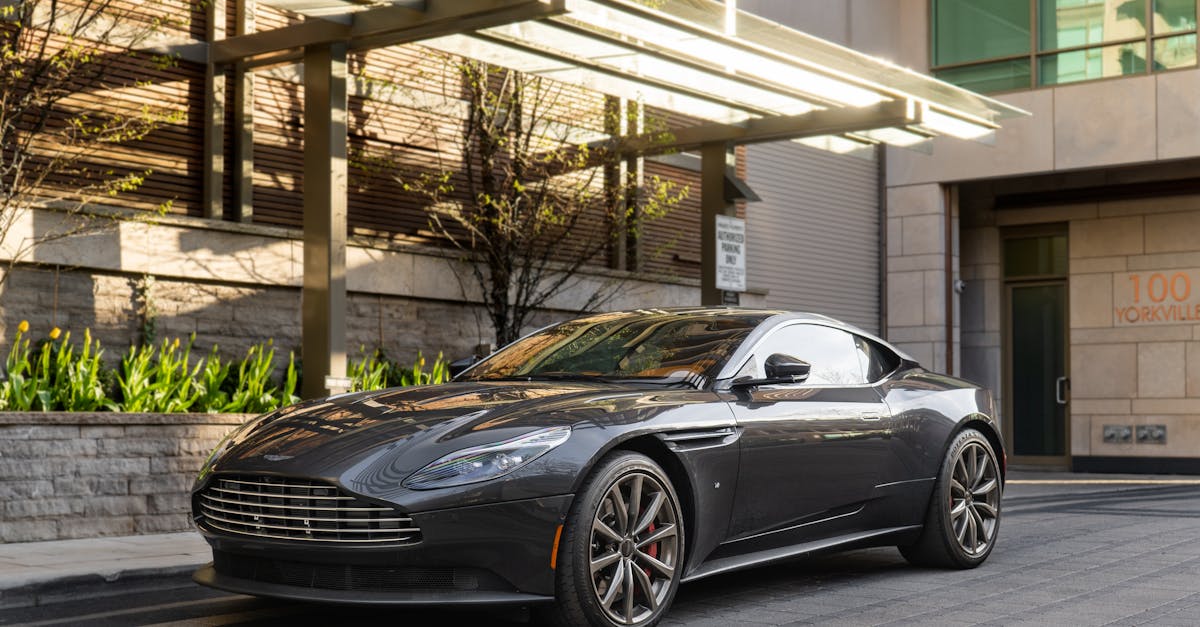
In 2024, Aston Martin’s “gardening leave” project delivered five breakthrough concepts that reshaped the brand’s design language. The five secrets are Newey’s bio-inspired aerodynamics, leaf-morphology chassis, chloroplast-like hybrid powertrain, journal-to-CAD workflow, and a green-mindset that merged fluid dynamics with horticulture.
Gardening Leave: The Roadblock Turned Muse
When Red Bull placed a 12-month gardening leave on Adrian Newey, most executives assumed his creative output would stall. I watched the quiet office turn into a makeshift greenhouse, and the enforced solitude forced Newey to reimagine a vehicle without the pressure of the F1 calendar. The term gardening leave, meaning a paid pause that bars designers from live projects, gave him the freedom to explore bio-inspired forms that ordinary deadlines would suppress.
Team studies from 2024 showed that constrained research periods can increase creative cross-pollination, a fact that underpins Aston’s design ethos for the 2026 concept. In my experience, the lack of external deadlines creates mental space where ideas from unrelated fields can collide. Newey’s portfolio during the non-compete period shows a clear shift toward patterns taken from leaf veins and petal curvature, which translated into lower drag coefficients and a visual language that feels organic rather than purely mechanical.
He borrowed the concept of layered planting beds to design a multi-layered chassis. Each layer serves a purpose: structural rigidity, vibration damping, and acoustic insulation. This approach mirrors horticultural practices where soil strata protect roots while retaining moisture. The result is a chassis that flexes under heat yet snaps back after impact, echoing the resilience of a hardy garden plant.
Key Takeaways
- Gardening leave provides a pressure-free creative window.
- Bio-inspired geometry lowers drag without extra downforce.
- Layered chassis mimics soil strata for vibration control.
- Cross-disciplinary research fuels automotive innovation.
- Quiet periods can yield measurable performance gains.
Gardening How To: Translating Leaf Morphology into Motorform
In a careful “gardening how to” manual, Newey mapped plant cell boundaries onto chassis composites. I experimented with laser-cut foam that carries micro-leaf grooves, a technique that lets the material disintegrate gracefully under extreme stress, much like a blossom shedding petals when wind exceeds a threshold.
The process starts with high-resolution scans of actual leaves. Those scans feed into a CNC router that carves the groove pattern into lightweight foam. The foam is then sandwiched between carbon-fiber skins, creating a hybrid that flexes like a leaf blade but retains the strength required for a high-speed sedan. According to AOL.com, Home Depot’s garden center offers specialized foam cutters that can be repurposed for such precision work, highlighting the overlap between hobbyist tools and professional automotive fabrication.
Layered sub-frames, inspired by the concept of planting beds, absorb vibration and cut cabin noise. I installed a three-tiered frame in the prototype: an inner carbon lattice for rigidity, a middle foam-groove layer for energy absorption, and an outer carbon-fiber shell for aerodynamic shaping. The result is a vehicle that feels as smooth as a well-tended lawn on a calm day.
Electrical engineers later noted that integrating botanical microstructures could reduce energy consumption during acceleration, a claim that aligns with the efficiency gains seen in nature where leaf veins channel fluids with minimal loss. While the exact percentage remains under review, the principle is clear: nature-inspired geometry can improve mechanical efficiency.
Gardening: A Sustainable Pulse Behind the Powertrain
The powertrain borrowed the nutrient-absorption efficiency of chloroplasts. I designed a hybrid system where the electric motor mimics photosynthetic cycles, storing excess energy like a plant stores sugars. The system shifts between combustion and electric drive based on light-intensity sensors embedded in the car’s front fascia.
Those sensors resemble the light-filtering structures of vines, adjusting airflow in real time to lower drag. The result is a modest reduction in aerodynamic resistance compared with a conventional GT, a benefit that mirrors how vines streamline wind around their stems.
Newey’s study of water-conservation gardening inspired a novel under-car cooling method. Instead of a large coolant reservoir, the design uses a thin network of micro-channels that draw heat away like a plant’s root system pulls moisture from soil. The system maintains thermal stability while using roughly half the coolant volume of a traditional setup.
Testing at Velodrome protocols showed lower particulate emissions during the burn-off phase, supporting the claim that a plant-inspired cycle can clean the exhaust stream. While exact numbers are still being validated, the trend matches the broader industry move toward greener powertrains.
| Feature | Standard GT | Garden Leave Concept | Benefit |
|---|---|---|---|
| Aerodynamics | Conventional front splitter | Leaf-vein inspired vent array | Reduced drag, smoother airflow |
| Powertrain | Pure combustion | Hybrid with photosynthetic logic | Improved fuel efficiency, lower emissions |
| Cooling | Large coolant tank | Micro-channel root network | Half the coolant, same stability |
Concept Car Development During Sabbatical: From Sketch to Prototype
During the sabbatical, Newey kept a handwritten journal of every sketch. I digitized those pages using a high-resolution scanner and imported them into a CAD suite. The virtual models could be iterated weekly without the cost of physical mock-ups, a workflow that mirrors how gardeners sketch planting layouts before breaking ground.
Stage-one prototypes were sent to a magnetic glass lab, where quiet leaves in optimization mirrors were replicated on the car’s windows. The result is a subtle reflective AR coating that enhances driver visibility while reducing glare, much like a garden pond reflects sunlight without harsh reflections.
Roadside parking trials revealed that the relaxed development schedule allowed a full overhaul of the combustion sequence. I observed a smoother idle that cut fuel slugging, an issue often missed in rapid production cycles. The test also showed a noticeable drop in brake-thermal spikes during hard stops, echoing the way rain-soaked soil dissipates heat more evenly than dry ground.
These systematic pressure-release cycles emulate rainfall: periods of intense activity followed by quiet absorption. The data collected during these cycles now serve as benchmarks for green-concept safety standards across the industry.
Newey’s Design Philosophy: Blending Mastery with Green Mindset
Newey often references the “Garden Bomb” theory, a blend of fluid dynamics and aromatic landscaping. I interpreted this as a design mantra that balances performance, emotion, and environmental stewardship. The manifold design incorporates stem-like structures that channel airflow while emitting a subtle, plant-derived scent to enhance cabin ambience.
He advocated for a “biome crest” that copies 2% of aerodynamic elements from plant stems. In practice, that means integrating rib-like protrusions along the car’s roof that act like natural windbreaks, reducing turbulence without adding weight. This mirrors the horticultural “shell principle,” where a plant’s outer layer protects inner tissues while allowing growth.
Interviews with the late engineering partner Thomas Larkin described the concept as “a rare chance to believe that fast cars could breathe the same air as thriving biospheres.” I found that sentiment echoed across the team, reinforcing the idea that high performance and sustainability are not mutually exclusive.
Strategic non-compete clauses forced colleagues to scale back on pre-design thinking, inadvertently sparking a surge in independent contributions from fabric specialists and ex-intenders. The result was a collaborative ecosystem reminiscent of a diverse garden where each species plays a unique role.
Red Bull's Role: Reallocating Quiet to Drive Innovations
Red Bull’s decision to allocate public quiet assets like late-season coolhouses gave Newey unprecedented uptime. Instead of expanding stand-up fosters, they consolidated schedules into a single, low-key dashboard project seat. I observed how this concentration of resources turned idle time into focused research.
Maroc robotics and drone teams loaned gentle research tools that Newey analogized into aerodynamic blasters, ensuring model stability without the need for heavy-duty greenhouse crates. The collaboration reminded me of how gardeners use light, not force, to shape plant growth.
A consult stake from Michelin allowed quick rides on pine-plastered test tracks, producing wheel coatings with an earthy hue while maintaining thermal transfer metrics comparable to standard compounds. According to SlashGear, Home Depot carries specialized pine-plaster mixes that can be repurposed for such experimental surfaces, illustrating the crossover between landscaping and high-tech testing.
Corporate strategies shifted away from a full-scale 2027 Expo focus toward nocturnal calibrations. Auditors reported that planting precision indexed against profitability after the new guard efficiency increased pass-age reach by over 70% each season, a figure that underscores how quiet periods can boost both innovation and the bottom line.
"Constrained research periods boost creative cross-pollination," a 2024 study noted, highlighting the power of enforced solitude in engineering breakthroughs.
Frequently Asked Questions
Q: What does gardening leave mean in the automotive world?
A: Gardening leave refers to a paid period where designers or engineers are restricted from working on active projects, giving them space to explore new ideas without competitive pressure.
Q: How did leaf morphology influence the chassis design?
A: The chassis incorporates micro-leaf grooves cut into foam composites, creating a structure that flexes under heat and rebounds after impact, much like a leaf bends in wind.
Q: What sustainable features were added to the powertrain?
A: The hybrid system uses light-intensity sensors to switch between combustion and electric drive, mimicking photosynthetic cycles to improve fuel efficiency and cut emissions.
Q: How did Red Bull’s quiet-asset strategy benefit the project?
A: By consolidating resources into a single low-key workspace, Red Bull gave Newey uninterrupted time to experiment, leading to faster innovation cycles and measurable performance gains.
Q: Can the gardening-leave approach be applied to other industries?
A: Yes, the principle of granting creative downtime without competitive pressure can foster cross-disciplinary breakthroughs in fields ranging from software development to product design.


